In 1958 Leonard Reed wrote a short essay called I, Pencil. The essay sought to highlight the surprising fact that no single person on earth knows how to make something as simple as a #2 pencil, yet still, they get made. At first glance, you might object: simple construction, only a handful of parts, can’t be that complicated! And yet it is a tremendously complicated enterprise involving countless workers (directly and indirectly) and global supply chains. Without any central planning or government compulsion, all the players assemble, even those who don’t realize they’re part of the pencil supply chain. A second unacknowledged miracle is how pencils manage to appear as if by magic, everywhere they are needed.
The essay is worth reading and can be found for free in the Foundation for Economic Education website and there’s even a children’s version here.
Currently, much of the world is experiencing some form of “lock down” and in tandem experiencing surprising shortages. Lock downs are certainly A strategy for combating pandemic illness so I will not waste time criticizing lock downs per se. I will merely point out that it is not the only strategy and some small, forward thinking Asian countries have managed to avoid the sledgehammer approach. My intent in writing today is to elucidate the concerns of those leaders who have pushed back against lock down measures and to dispel some of the hyperbole and hysteria that has been leveled against them
The main concern, summarized by Trump, is that “the cure would be worse than the disease.” Unfortunately, it would be revealed that he didn’t quite understand the point he was making, but more on that later. When people heard these statements, by Trump and others, they only heard the most obvious implication: millions of people would be stuck at home, lose their jobs, be unable to pay their bills and in short “the economy” would suffer. If you add in the untold social and psychological toll, I fail to see how this ISN’T a legitimate concern, but regardless, people balked that there should be concern for the economy at a time like this. Grandstanders said such things as “you can’t put a price on someone’s GRANDMOTHER” and similar crap. In their minds, the economy was just the stock market, and if it had to fall to save lives, then who cares.
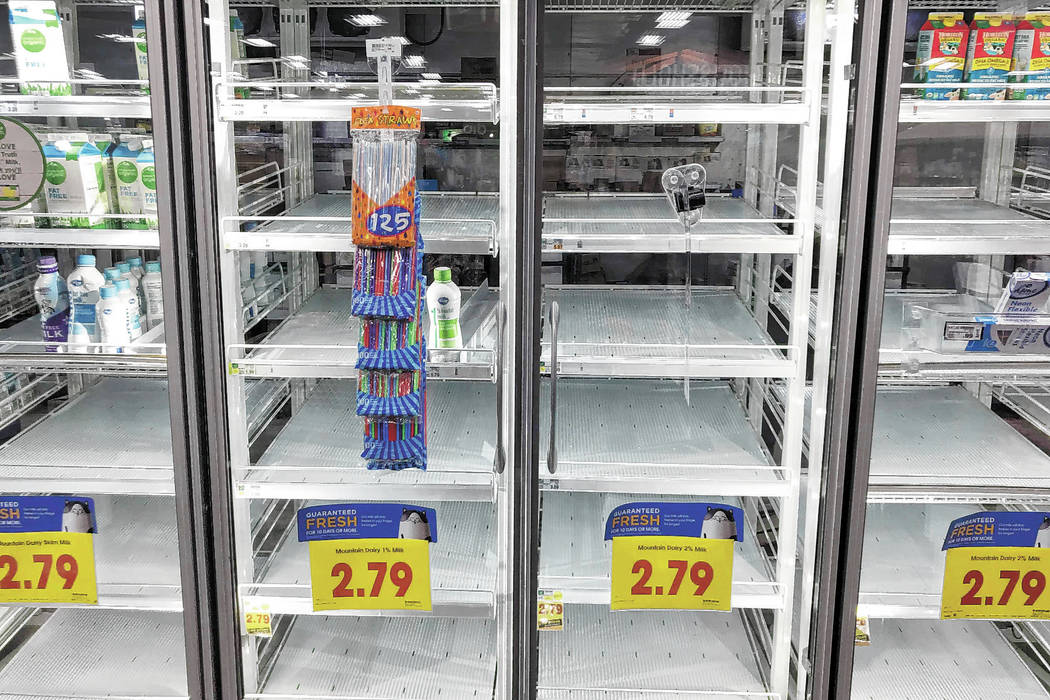
The trouble is, the economy is so much more than the DJIA or SP500, and if those people were being honest, they knew they were being hyperbolic. The economy is more than just complicated, it’s complex and no one knows how it works. No one can forecast all the effects, intended and unintended, when whole sectors are closed by government decree. “Non-essential” business may prove to be quite essential in the long run, and ultimately, only the economy itself can determine what is essential and this can only be discovered after the fact when things no longer work. Here is a recent example: UK is facing egg “shortages” of a novel fashion. There are plenty of eggs, but they are rotting in storage because the cartons have suddenly become unavailable! The factories that produce the cartons have suspended operation. A second example: here in the states, dairy farmers are DUMPING milk down the drain, at the same time that grocery stores are rationing milk and customers are facing empty shelves! The restaurant wholesale distribution pipeline has completely seized up now that most restaurants have shut their doors. The restaurants that would like to sell their wholesale foodstuffs directly are disallowed by health codes in most jurisdictions. The supply chain for retail/grocery store dairy products cannot accept the milk that is no longer needed in the wholesale supply chain because they are at their physical limit of production capacity! In short, it is a fact that restaurants account for 1/3 of the food distribution in this country, but no one was prepared for how that fact would play out in this new reality of lock downs and shut downs.
These two examples concerned our food supply, which we all have a stake in, but I assure you that the supply chain for the masks, respirators and PPE that is so desperately needed in the healthcare sector (all sectors if we’re being honest) is equally complex. Supply chain interruptions and heavy handed government attempts to direct production will only further restrict the shrinking supply of these critical goods. Currently, there are talks of diverting PPE shipments from other countries to our own. Aside from the obvious ethical problem with this, it’s worth noting that the deals a multinational company makes are often multi-part deals: sale of equipment to X country provides capital to purchase raw goods from Y country for manufacture and sale to Z. These deals are much more complex, but they allow for a company to take advantage of tariff, tax, and currency disparities. Interrupting this system will only add delays and cost and in the end may break it permanently.
Before we leave, check out these charts. They come from The Heritage Foundation, and you can visit their site and play around with the data yourself. People may argue over the subjectivity of some of the metrics, but overall the trend is undeniable: more freedom means greater health and greater wealth.

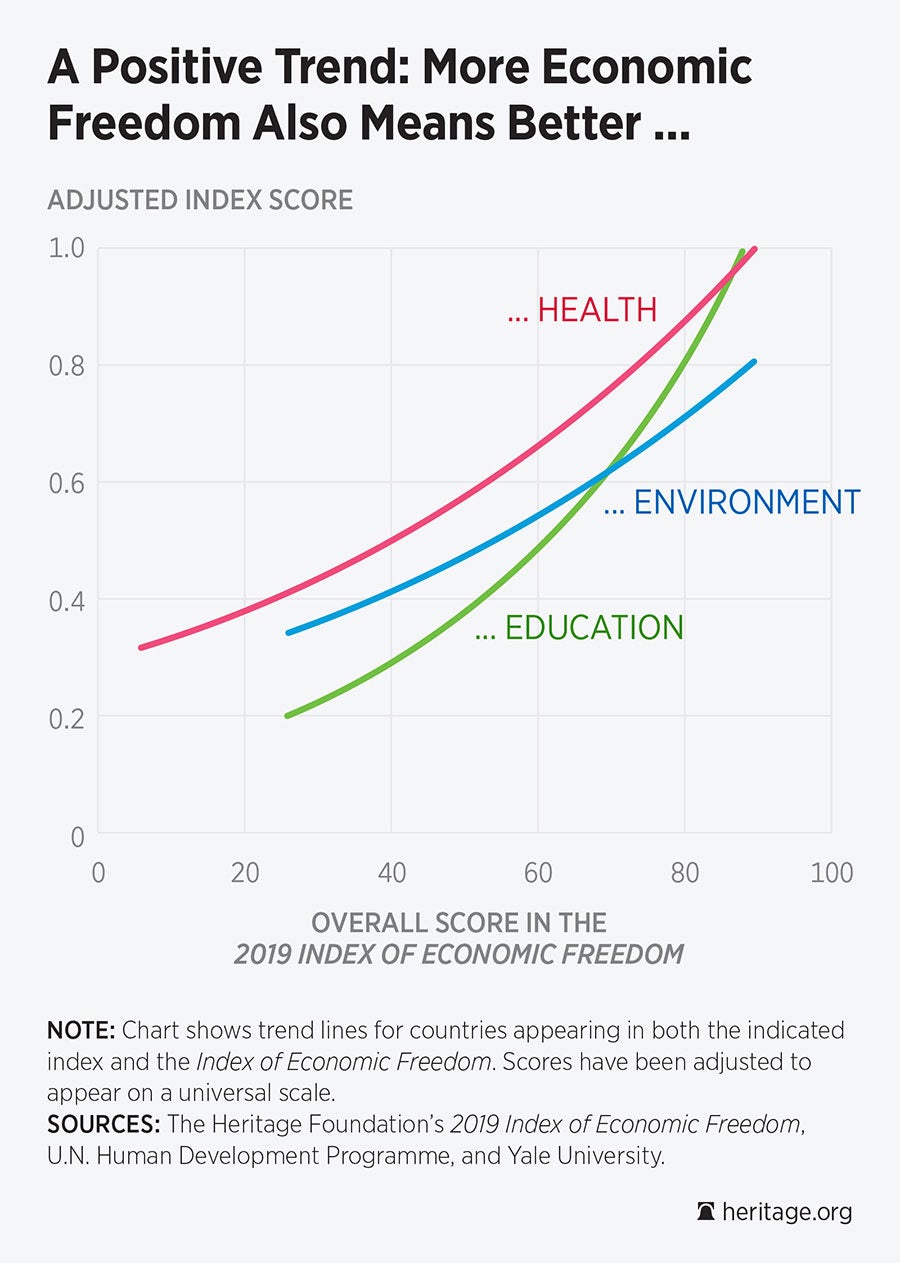
We have just had the sharpest drop backwards in freedom, economic and otherwise, ever imagined. There WILL be consequences if we remain here much longer, and they will not be pretty.

 SwalesOnContour.com